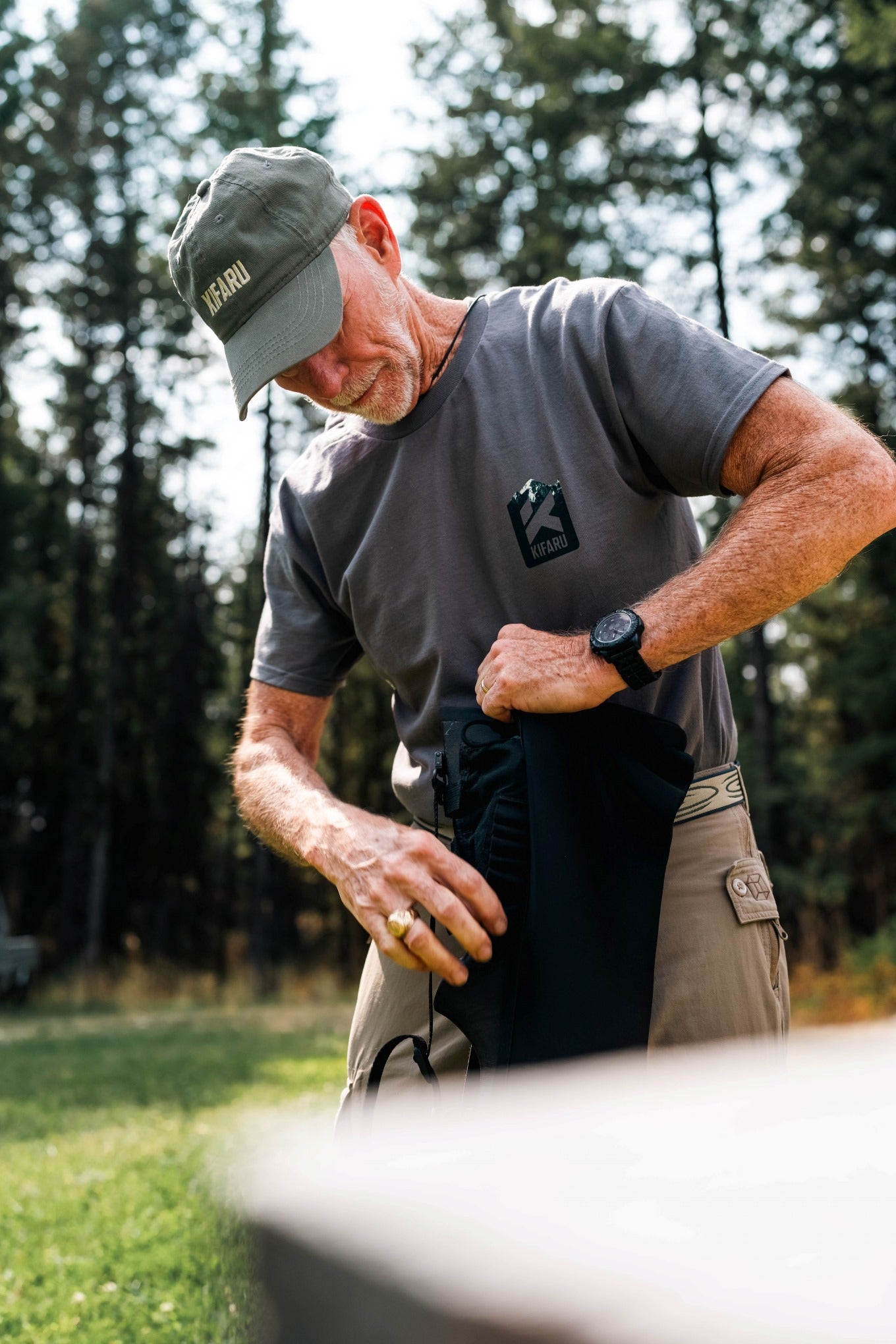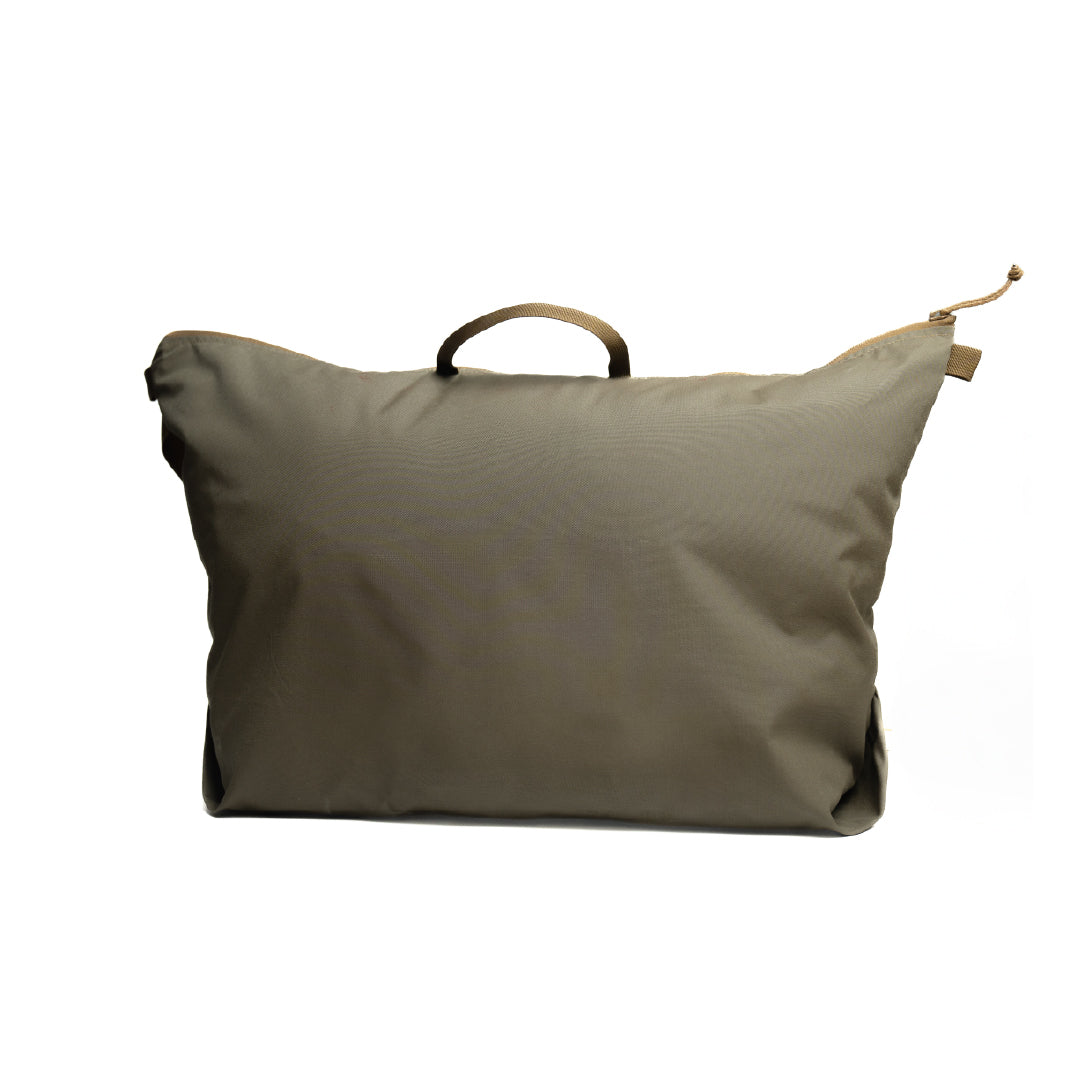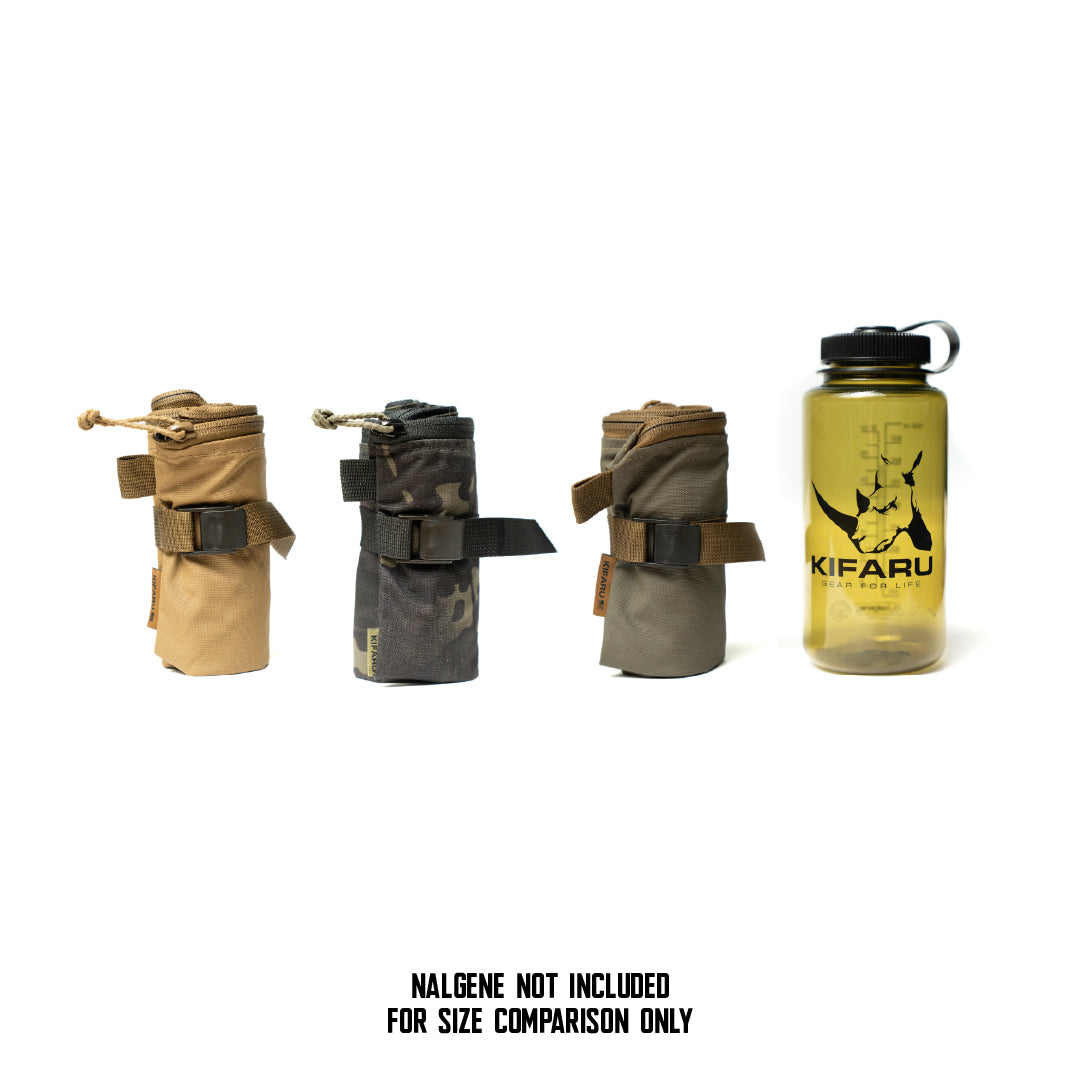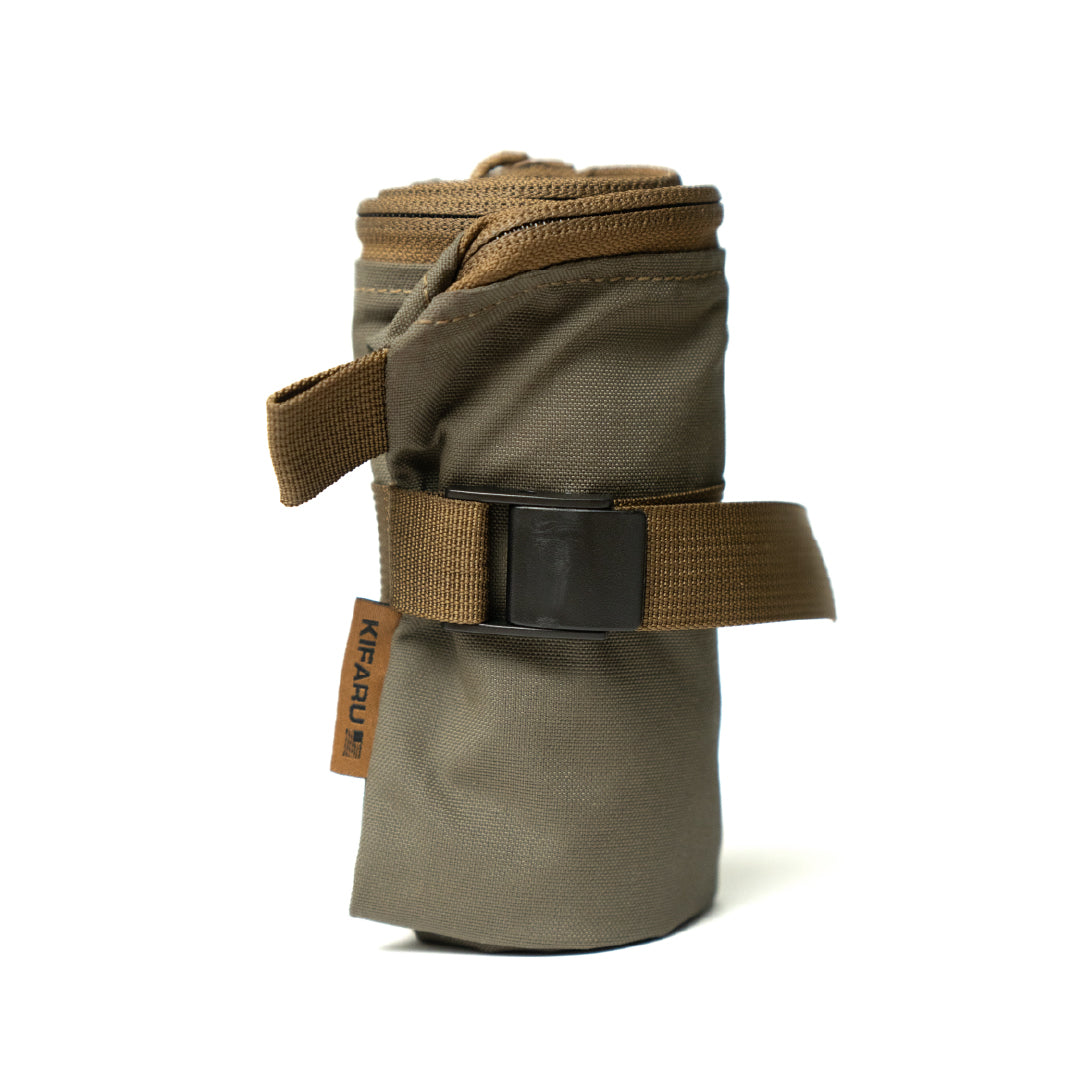
I’ve been sleeping out in the middle of nowhere for over fifty years now. Imagine a just-turned-13yr.old, .410 shotgun in hand, wandering the rabbit fields a morning's march from home. Outfitted by Army Surplus. I'd set up camp and feast on the game collected, emulating in my mind explorers like Lewis and Clark, spending the night. I started out with a blanket roll. Saved the shekels earned from kid-for-hire jobs and soon moved up to an Army Surplus duck feather mummy bag. Eventually, a modern goose down bag. Followed by several down bags–one for every clime.

It was one of those down bags (a high-end Expedition version) that collapsed on a lengthy, frigidly mid-winter trans-Yellowstone ski trip in the early seventies–nearly killing your’s truly. Because of that episode, I was one of the very first purchasers of a then-brand-new “synthetic" bag. (I think it was a Snow Lion–the company is now defunct.) I was ( and still am) a long-range backcountry wanderer, and had decided there was no way I’d trust my very survival to unreliable down again. I’ve owned a jillion synthetic sleeping bags since. I’ve used all the synthetics, and found Polarguard to be the very best, all up, insulation material. My Polarguard-insulated bags have been repaired repeatedly, but the insulation in them has kept on keeping me alive despite many inadvertent soakings, burns, and other misadventures for decades. The bags may have had shortcomings, but not from good old reliable Polarguard, which did exactly what it was supposed to do–provide a fail-safe insulation between me and the indifferent-to-my-demise elements.

With that background, let’s bring this sleeping bag story up to date. A couple of years ago I was conducting a series of sleeping bag tests. I do that every so often...keeping abreast of developments. I asked one company about sending me a bit of material to make a modification to their bag for my own use. The company declined. So I resolved to do it myself; in fact, I'd just do a whole bag. I’ve been asked many times over the years to build sleeping bags. I’ve always been plenty busy with packs, shelters, and such. Just never got to it. Well, I finally did. The program has been underway two years now; of course that’s the “official” part of it—I’ve had fifty years of “unofficial” soak time. Considering my age, my lifelong outdoor passion and my career as an in-the-field professional designer it’s quite possible, even likely, that I’ve logged more nights in sleeping bags than anybody ever has. And, as you might imagine, I've been paying designer-like attention the whole way.

As usual, I started this project with a blank slate. I would shoot for EVERYTHING that I wanted a “sleeping bag” to do. As with everything I carry I wanted “it” to do as much as possible. I’m relentless at that. I recalled those thousands of nights in built-by-others sleeping bags, none of ‘em completely suiting my needs. So I went for the whole deal, getting right in the middle of such cussable deficiencies as zippers that hang up, hood adjustments that that you have to guess at, “confinement”, hot, sticky legs, wimpy or completely absent (!!) draft collar, and on and on. A major goal was to figure out how to "adjust" a bag's rating instead of just automatically having to purchase another bag; or fetching the dead weight of an "overbag". (Asking the right questions is a big part of the design process; so is determination to find the answer.) Another major item on the agenda was taking a serious look at stuff sacks (there had to be a better way!). Durability and reliability were paramount objectives from the get-go. And so was right NOW evacuation provision.

The needs I worked on parallel those of our warriors, whom I signed on to support following the events of 9/11. These sleeping bags are expressly designed for such men. They are more durable and reliable than any sleeping bags ever built. They are built to comfortably accommodate a man with his boots on (indeed, with all his clothes on as well, including armor and second line gear) , or with his boots off but in the bag with him. Thus the very generous foot and lower bag roominess. Other items one wants to keep warm–or dry out–can be stowed inside too of course–sox, wet clothing, water supplies, etc, etc., etc. (The insulation is designed to take it, and the shell material will too.) The whole bag is like that–quite “roomy”, for whatever needs to be inside with the user. There’s more to this roominess aspect. After all these years I have the carry-weight vs. rest-as-recovery equation figured out. REST in one’s bag outweighs any slight carry advantage in getting there. Hot, sticky legs because of a too-tight bag at warm bed-down times interferes with recovery-grade sleep. Too much constriction of movement does too, especially if you don’t have a LOT of regular usage to get accustomed to it; even then, much more restful sleep occurs when you have “enough” wiggle room. I’ve made sure these bags hit that balance of weight vs. wiggle room for restful sleep. I wish I had done it years ago. And every bag has provision for instant evacuation.

I realize this design commitment is NOT the “normal” one dominated by the civilian backpacking world, wherein every ounce of both length and girth is sacrificed on the altar of light-as-possible weight. But fighters don’t get to go home if conditions get awful; they don’t get to “plan” length-of-trip either. Wet clothing, freezing water, and boots...best bring it all inside the bag...and there needs to be enough room (I’ve owned bags I couldn’t get anything else inside but me) for all this, and without collapsing the insulation! Come to think of it, remote hunters have the same needs (bush planes get delayed and passes get snowed in) and, reaching further back into my past, so do expeditioners, who really can’t count on any kind of assured “bail out”.

In short, these are not recreational bags. They’re for LIVING in, for the duration, no matter the circumstances. You can compare the philosophy behind these sleeping bags to that of our tipis: they are not as light as we can possibly make them, but they ARE as light as possible consistent with rock-bottom reliability at keeping you sheltered and alive anywhere, anytime...and still plenty light for man-carrying. Same deal with the sleeping bags. Consider them PHASE II of our Shelter Systems. Nevertheless, the weights on these bags are STILL quite light, as you'll surely notice. This is due to the materials we've selected, which are both lighter and stronger. So we've been able to put some weight back into livability. All up, a very good outcome I think. The materials are very costly; and so is the attention to detail of design and construction, but worth it for the far-from-merely "recreational" tasks visioned for these bags.

The Modular Overbag (MOB) components of the overall Regulator design came to light early in this design quest. Over the years I’ve learned that as one begins to outstrip sleeping bag temperature ratings he feels the encroaching cold in “spots.” For some, it’s the feet first. For others, it’s the shoulders, or upper body The “solution”, up until now, to exceeding a bag’s comfort zone–no matter how incremental-- has been gross overkill: buy a lower-rated bag, or purchase an “overbag”–an entire sleeping bag built to slip over the host bag and provide an increment of warmth when thusly combined with the original bag. Aware of those “spots”, I asked: "why not 'REGULATE' the issue by carrying only PORTIONS of an overbag–the portions needed for addressing the cold spots unique to you, the user?" Thus leaving the rest of the weight of an entire overbag behind. And so that’s what I did–split an “overbag” into three distinct sections. Carry only the the section(s) you need for the conditions at hand. As the seasons transition. Saving the weight and bulk of an entire overbag...or an entirely new sleeping bag.

I quickly realized that, as incremental “elements” of a three-part “overbag” , at least the uppermost segments could also duplicate items of heavy outerwear, if I adapted them carefully to take on that role as well as their sleeping bag temperature-enhancement role. Multifunction–right down my alley! Ergo, the Upper Section of the MOB can handily replace a full-on parka. By zipping on the MOB middle section beneath the upper section you will have very robust leg protection as well, and can leave behind insulated pants. The upshot is that you’ll wind up with very much less weight carried in. Compare the weights of our upper and middle section MOB components to typical parkas and insulated pants. You will likely find that our “overbag”, the MOB, is completely “free” weight. Maybe even weight REDUCTION, because they are actually very much warmer than any convententional clothing available. Our MOB Upper Section has to be experienced to understand. It is “tailored” completely differently than conventional clothing. It’s admirable function in the role of sleeping bag upper section actually enhances dramatically it’s alternative role as a hooded, semi-sleeveless parka. We term it semi-sleeveless because it is designed to cover the shoulders and down over the upper arms quite securely–the most vulnerable areas of heat loss. Only an intermediate layer of normal clothing need be worn to keep the remainder of the arms warm; an ultralight wind barrier garment added directly over the intermediate layer if wind is present– the MOB is thoroughly windproof. Same thing with the Middle Section as alternative to insulated pants. Wear it full length for mitten-compared-to-glove superior warmth. Even folded up to the waist (and drawstring-cinched) for very active use (such as running as compared to walking) it provides the same sort of superior warmth, especially when sitting on its double thickness. Getting back to the Upper Section for a moment, it is designed to pull the arms inside, and zipping up within. In this mode, it is quite simply the warmest garment ever imagined! One has full movement inside, even with full body armor and second line gear mounted. It is the only “garment” to accommodate such equipment. The upshot is this: no finer clothing exists for warrior OP’s, or for hunter stands. And it’s all “free” weight if you leave behind your conventional overbag.and clothing in favor of the MOB. It’s a weight REDUCTION if you are using the complete MOB as your stand-alone sleeping bag, and leaving conventional outerwear behind. Please note that the three components of MOB's are available seperately, or as a Complete unit. Some of you may even want to mix and match--40* Upper Section and 20* Foot Section. You can even aquire a Long Foot for extra storage in wintertime. Etc. The choice is yours.

Both our Base Bags and our MOB’s are designed for immediate bail-out. The zipper on the Base Bags is snag-proof. The MOB’S, when rigged over the Base Bags as overbags, can be snapped closed as an alternative to zippered, so that they will fly open with no impediment whatsoever if, when, the Base Bag is evacuated in emergency mode. (The snaps also serve as extra closure in the event of extreme cold/wind conditions.) Of course the same is true if the complete MOB is used as a stand-alone bag–it can be snapped closed so that immediate evacuation is ensured. (The snaps are designed to release readily in that event.)

What a ride! Finally getting around to sleeping bags has been as challenging a design project as any in my career. But the resulting innovation gives me great satisfaction. Somewhere in my Essays on the website, written near the inception of Kifaru, I say that Kifaru gear is designed at least in part to keep me afield as I age.  This latest project is a perfect example of that quest--lighter than ever sleeping bags.  Lighter even than goose down, if I use the MOB's and leave outerwear at home.  And completely "safe" as well.  I'll probably be using mostly MOB's personally, and "UNDERbagging" as needed with Base Bags.  Fact is, the selection of MOB's will cover ALL my bases, unless I find myself headed for truly Arctic climes in mid-winter.  THEN I can simply underbag my -20 degree MOB come sleep time.

I'm very pleased to be able to add Regulators to my personal quiver of "out there" tools, and I sincerely hope you will be too.

Patrick Smith

February 2007

Golden, CO USA